Every designer had a different level of experience with AI.
Teaching AI to remember how our team designs
INA Agent
What if one designer's good decision made every designer better?
We were a handful of product designers with more government modules than time. Everyone was already using AI, and everyone was using it differently. I wanted it to make the whole team faster without every designer drifting into their own style.
Mapping the gaps
Finding exactly where our workflow broke when AI joined it.
Building the brain
One shared memory, and skills that hold the way we work.
Rolling it out
Making it effortless for every squad to use, every day.
Problem: our AI forgot everything, every single brief.
Each new brief started from zero. The AI didn't know our design system, the ministry's rules or what we decided last week, so every designer re-explained it in their own words and got back their own version of the answer.
There was no standard AI-assisted workflow.
Prompts, guidelines and best practices weren't managed as shared knowledge.
AI use was individual, with no shared standard.
Opportunity: our edge isn't a better model. It's a shared memory.
Every team has access to the same AI models. What only we have is our own history: the decisions, the patterns that already passed review, the rules each ministry cares about. If the AI could keep that, and keep it for everyone, it would get better every time anyone used it.
It reaches for IDDS patterns the team already approved.
Every session starts from what the team knows, not from zero.
One designer's lesson becomes everyone's default.
Introducing the INA Digital Design Agent: one design partner, one shared brain.
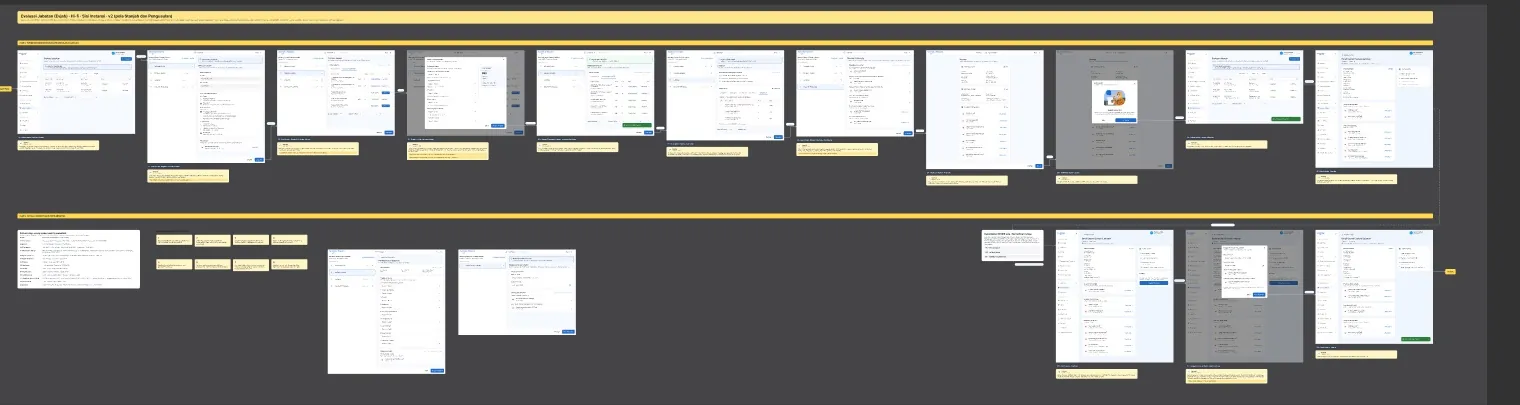
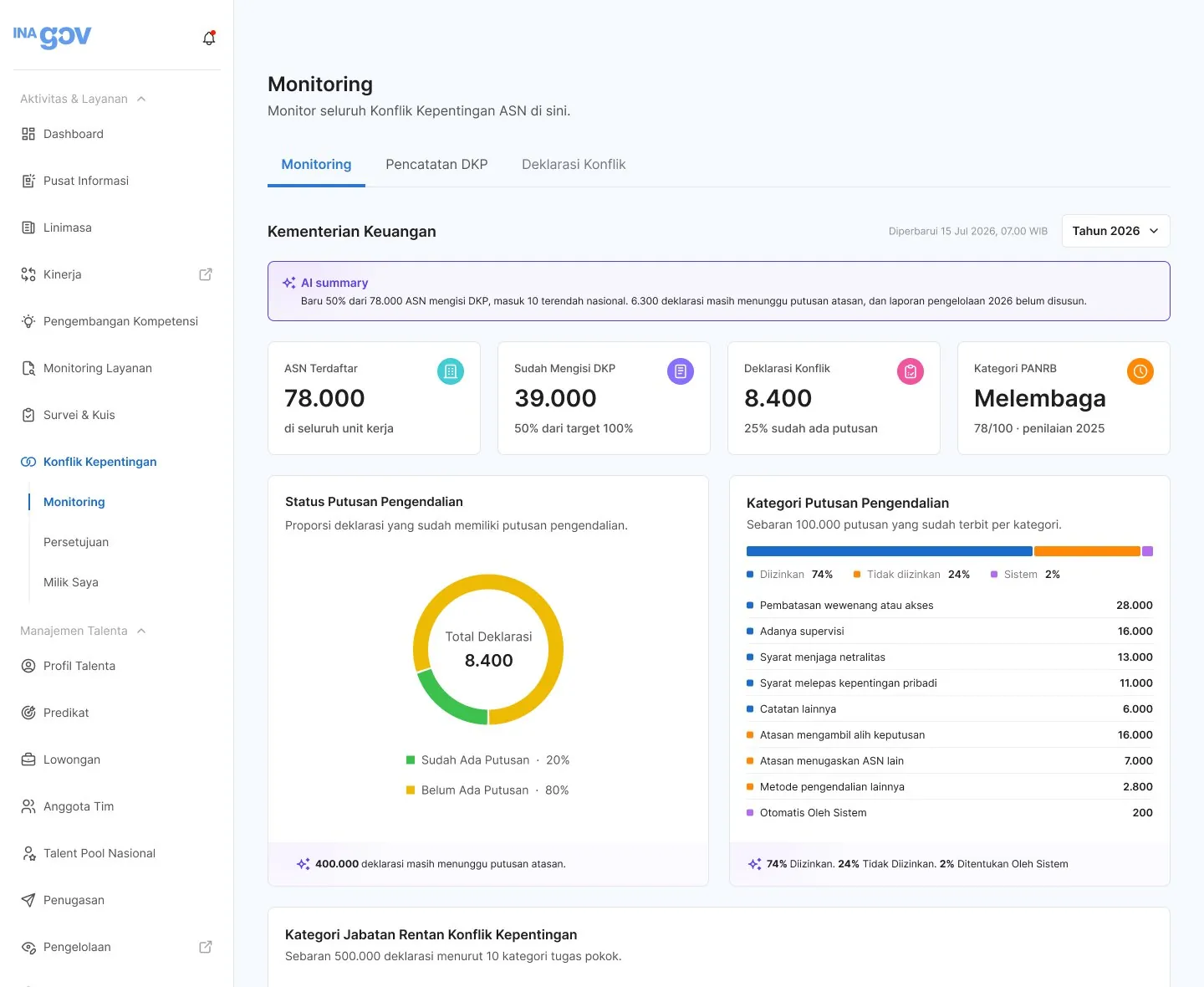
Any designer opens it and types ina digital agent. It takes a brief all the way to flows, hi-fi screens in Figma built from genuine IDDS components, and a handoff for developers. And it remembers everything for the next person.
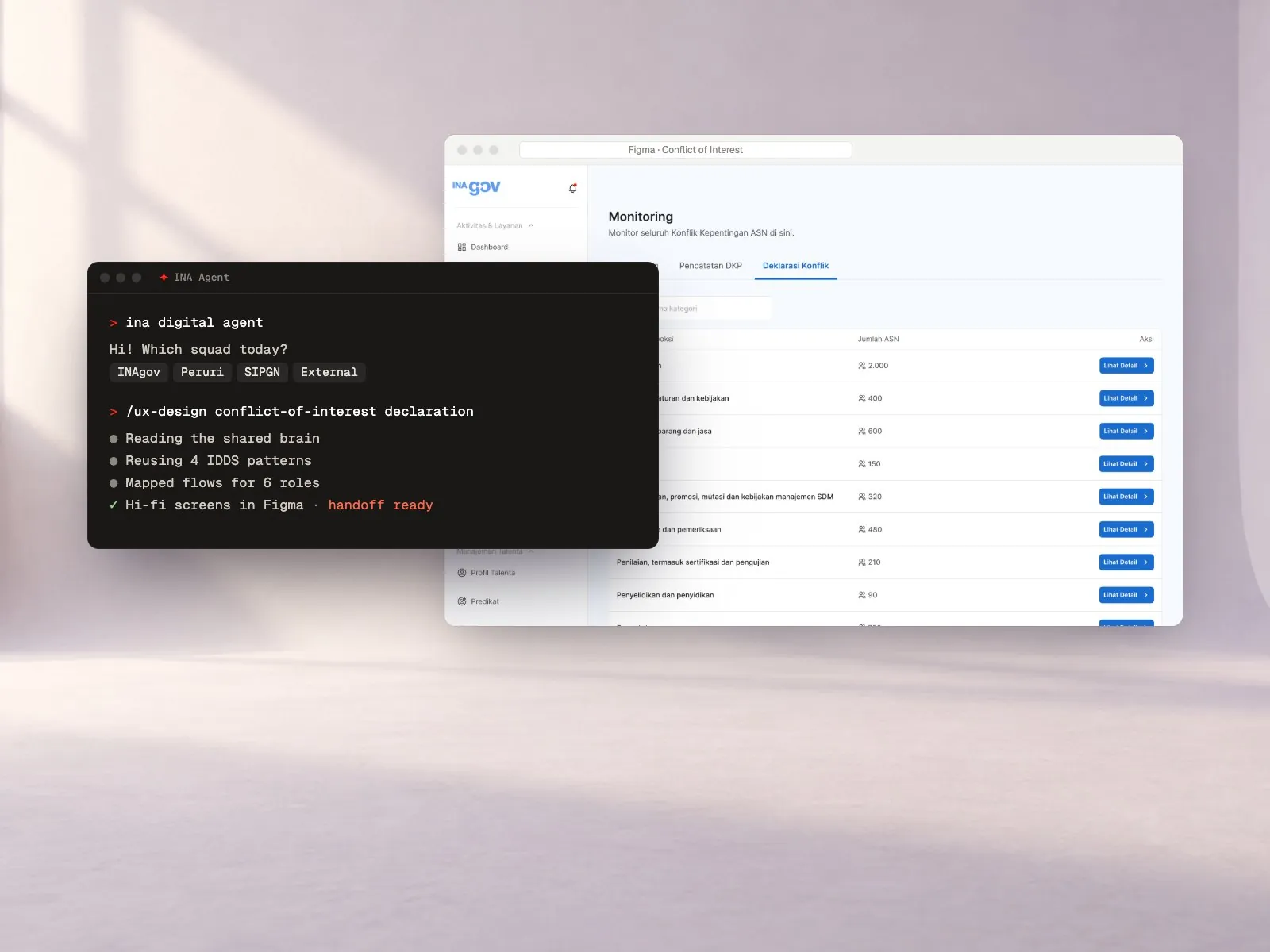
Start from any door
Every session opens the same way, with five clear paths. Nobody has to know how to prompt.
Reuse before redraw
Before drawing anything, it searches the shared pattern index and starts from what's already approved.
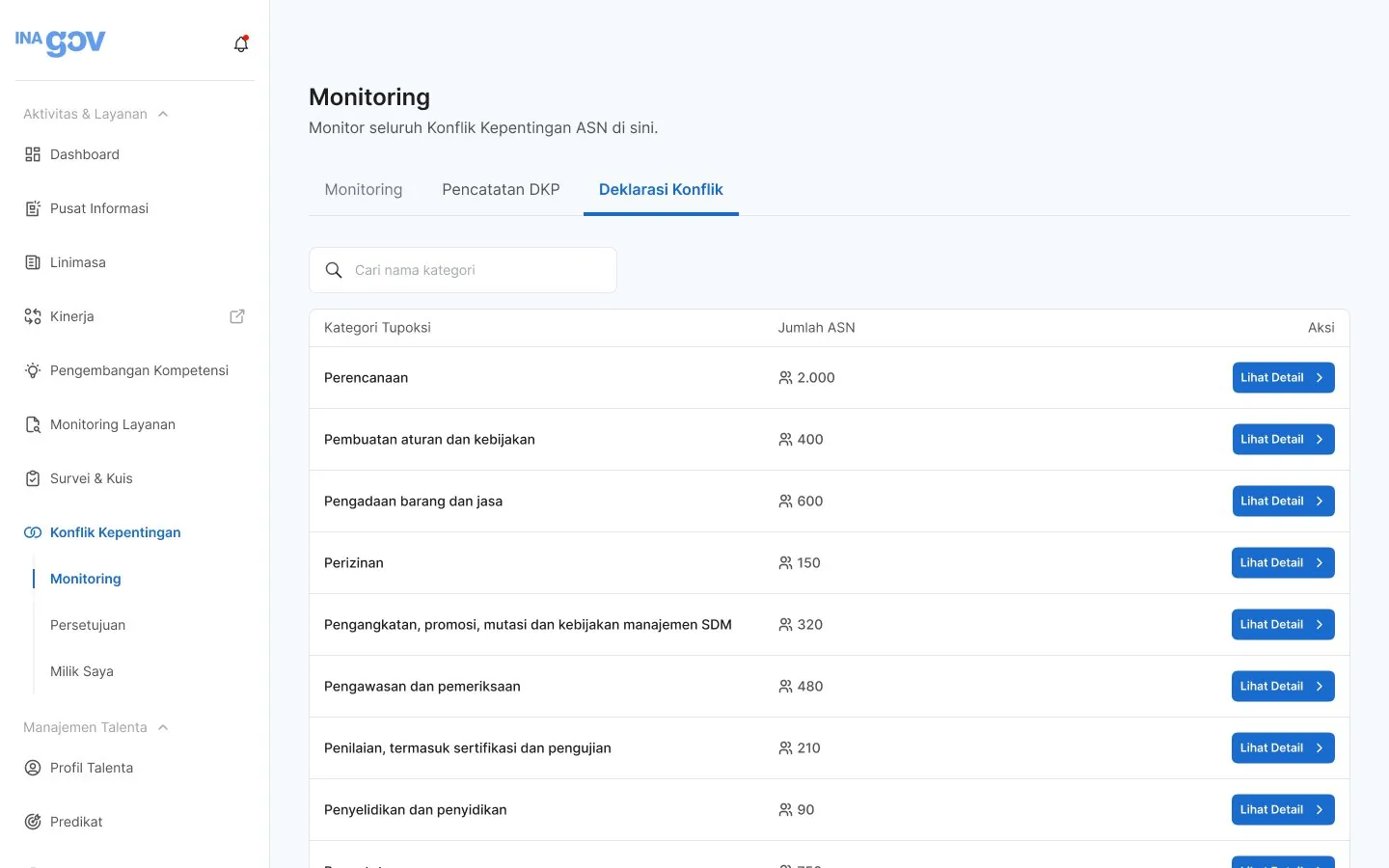
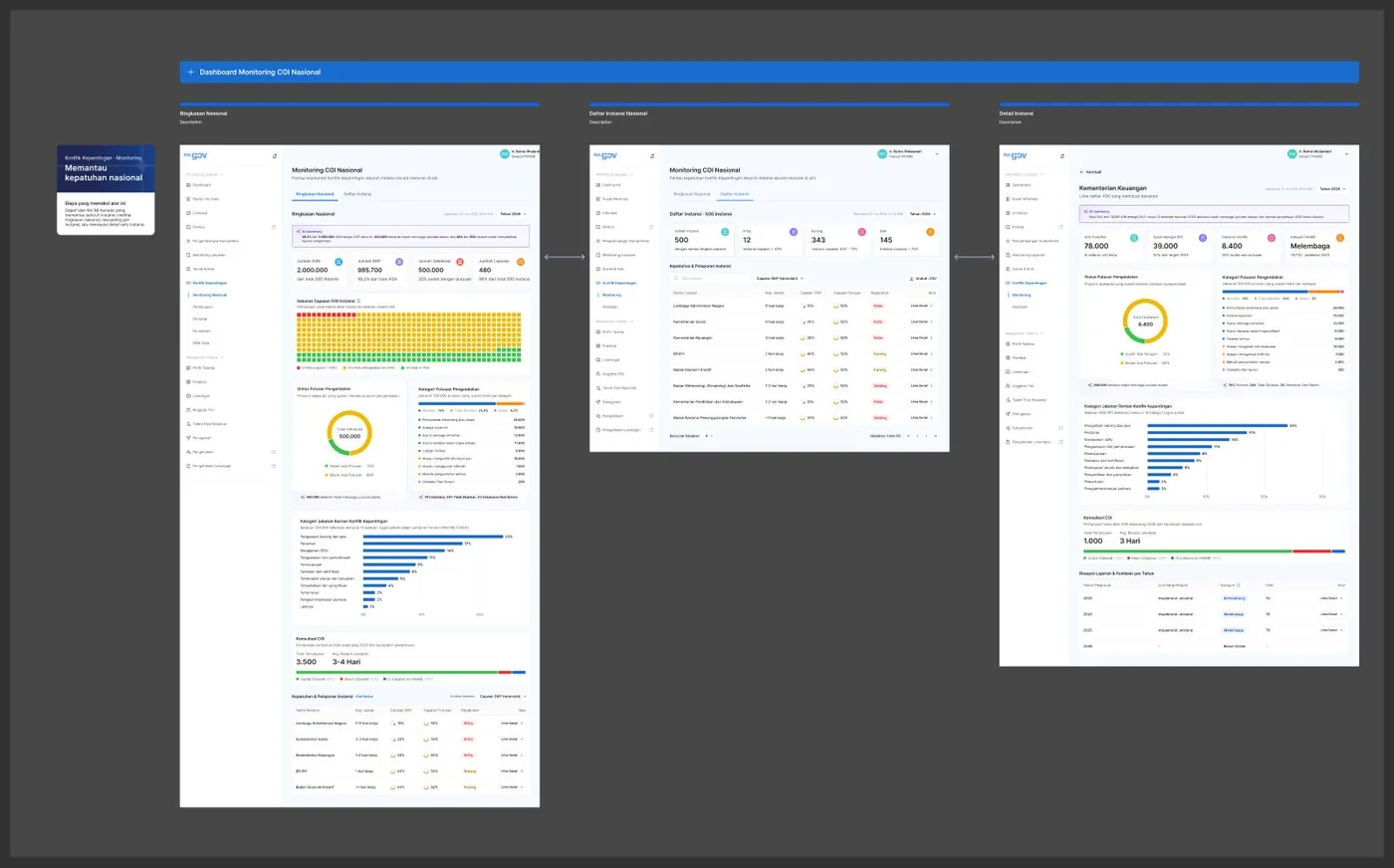
Brief to hi-fi, in Figma
Flows and screens land in Figma, built from the real IDDS UI Kit, not lookalikes.
Every session teaches the next
What one designer learns is saved and synced automatically. The next person starts from there.
We looked hard at how our team actually works
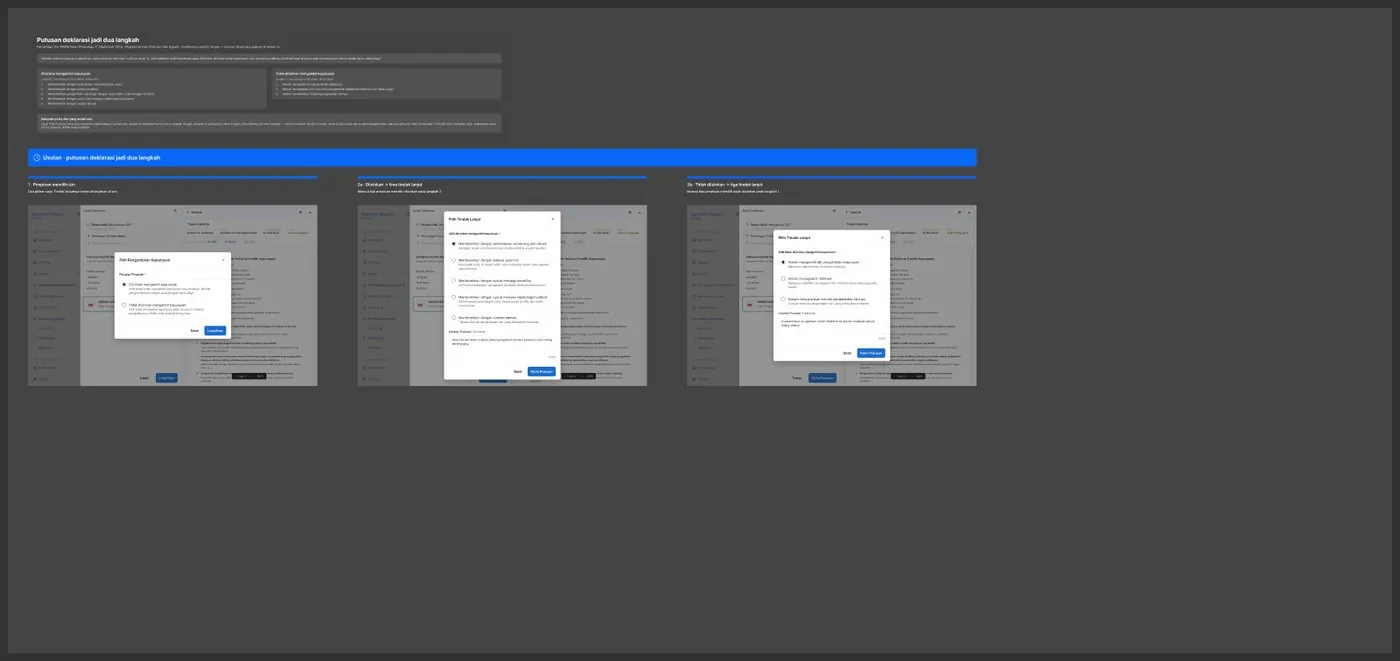
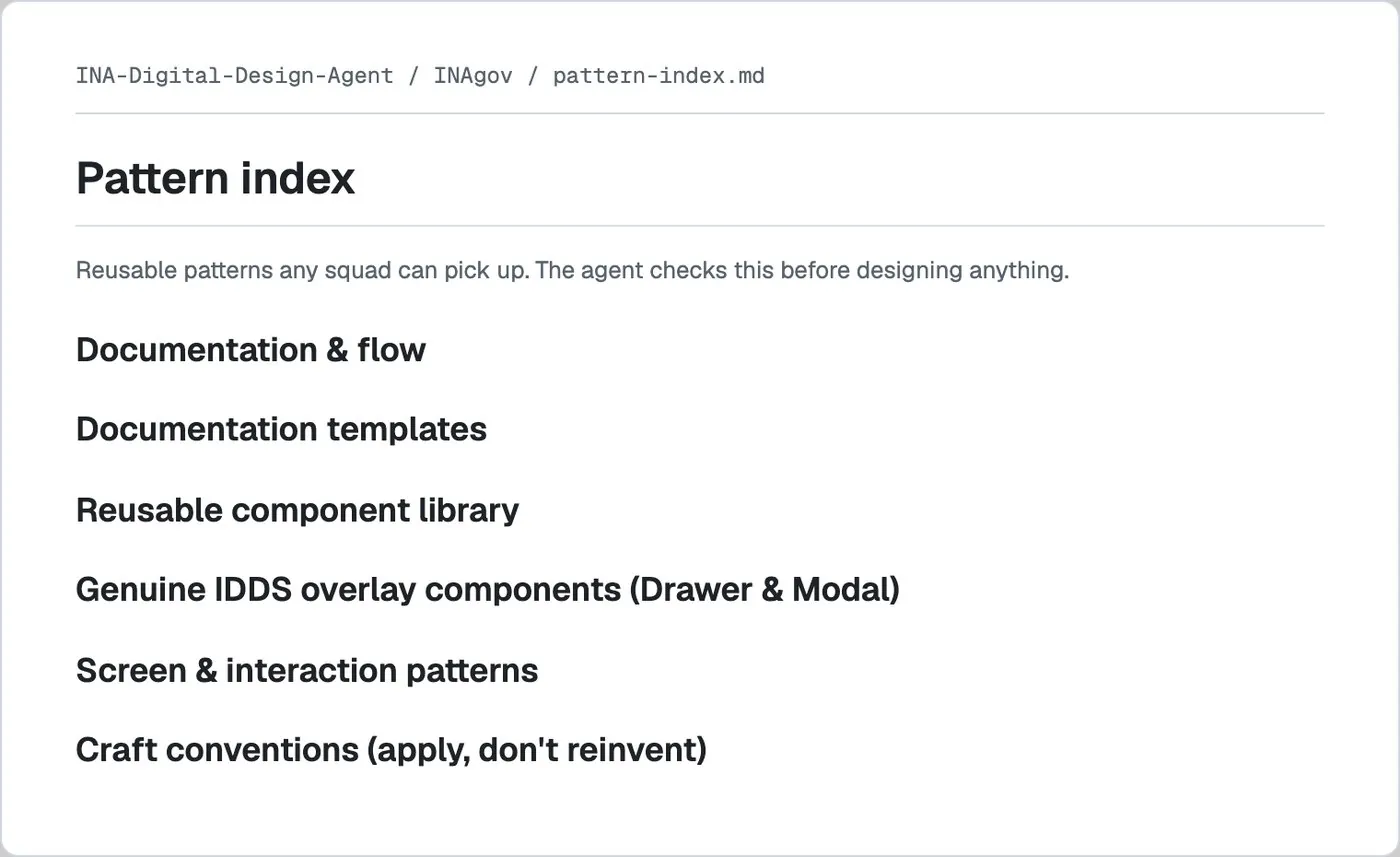
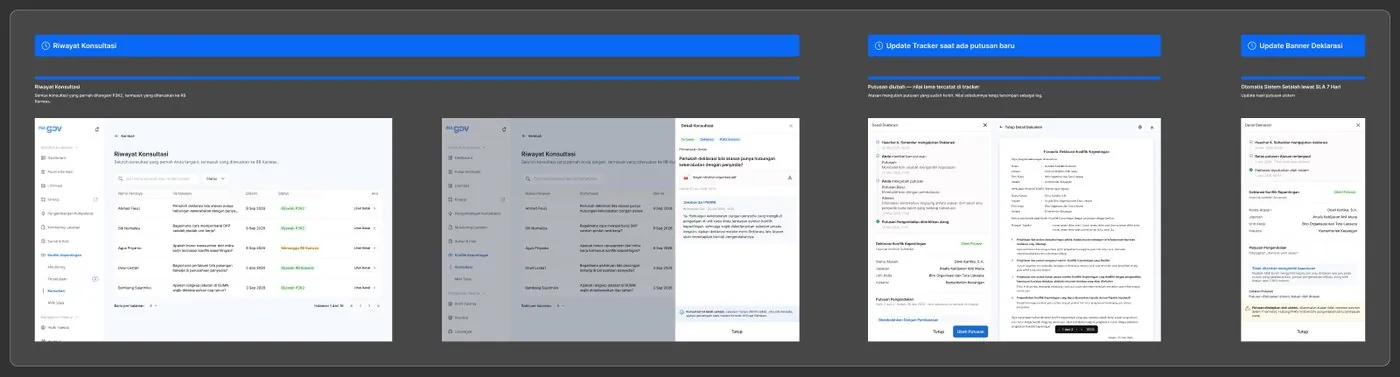
Before building, I mapped where AI was helping and where it was quietly hurting: how each designer prompted, where decisions got lost between sessions, which patterns kept being redrawn. Then I wrote the findings into the agent itself, as specs, conventions and a pattern index.
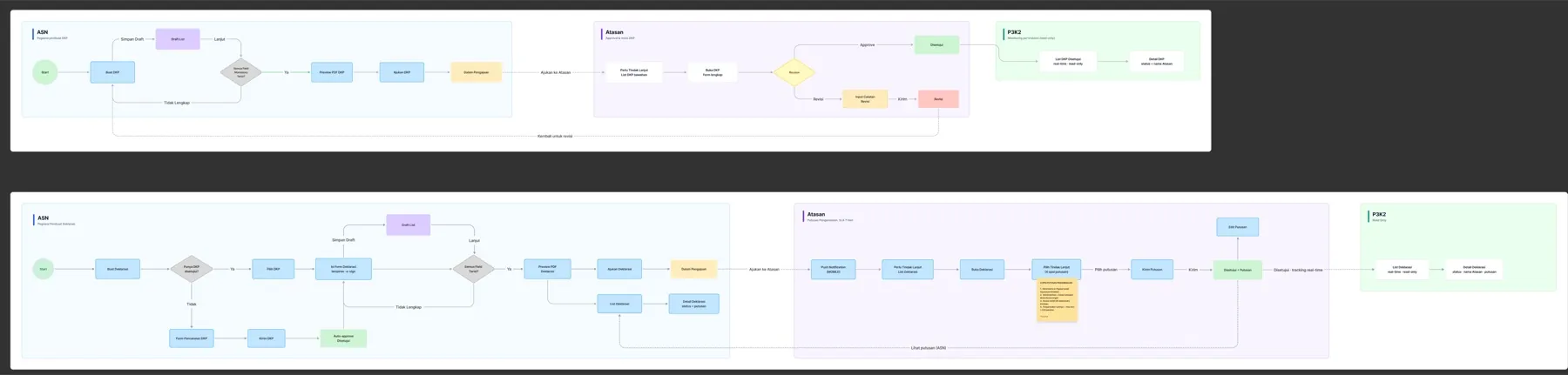
Inside the shared brain
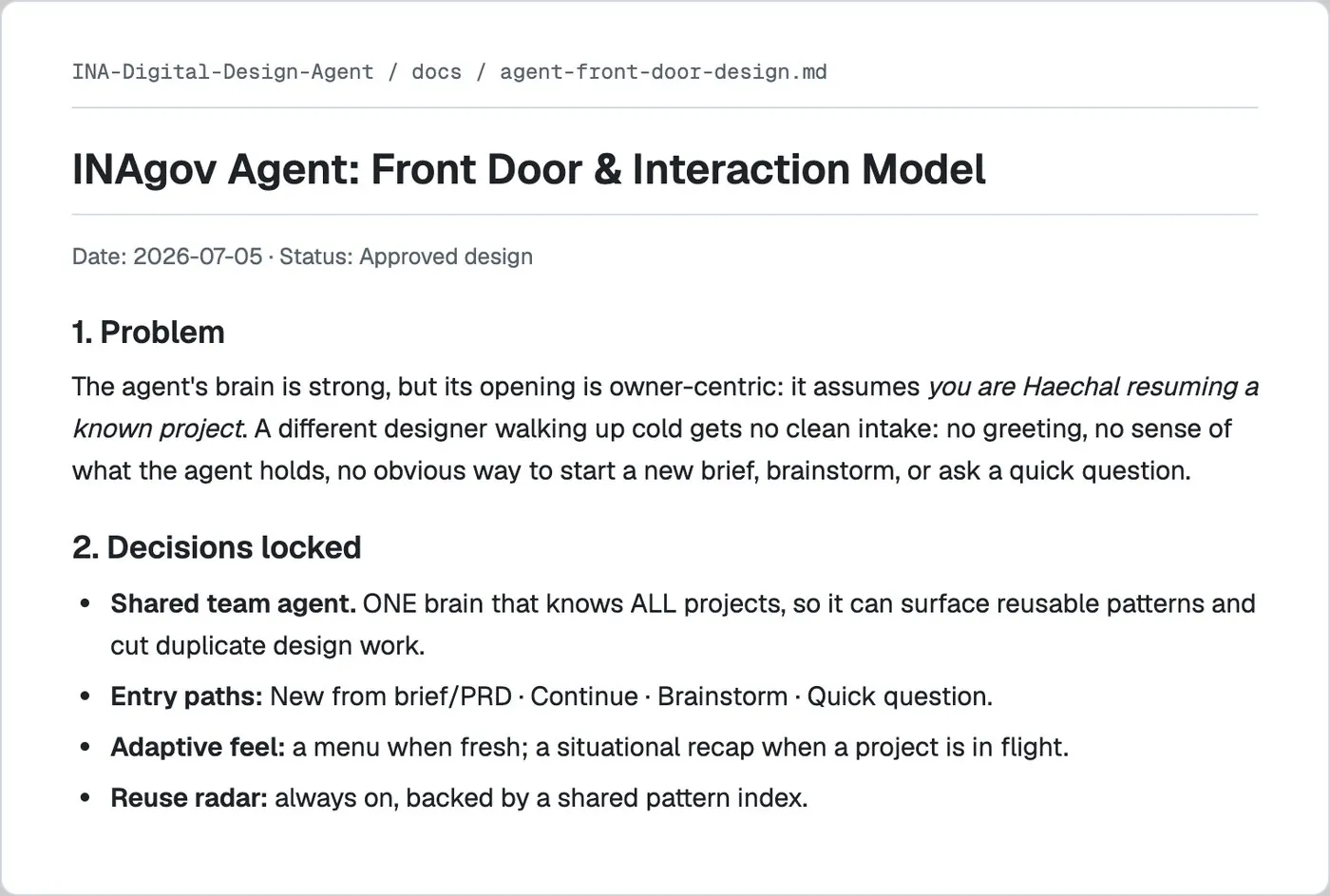
The first version only worked for me.
The brain was strong, but its opening assumed you were me, resuming a project I already knew. A teammate walking up cold got no greeting, no sense of what the agent held and no obvious way to start. So I designed a proper front door.
A clear menu when you're new or starting fresh, and a short recap of what's in flight when you're mid-project.
It answers in whatever the designer writes in, Bahasa or English, natural for a mixed team.
Any time someone starts something that smells like an existing pattern, it points to where that pattern already lives.
Feedback is tagged, so one designer's preference never silently becomes everyone's rule.
One brain, two layers, and skills on top
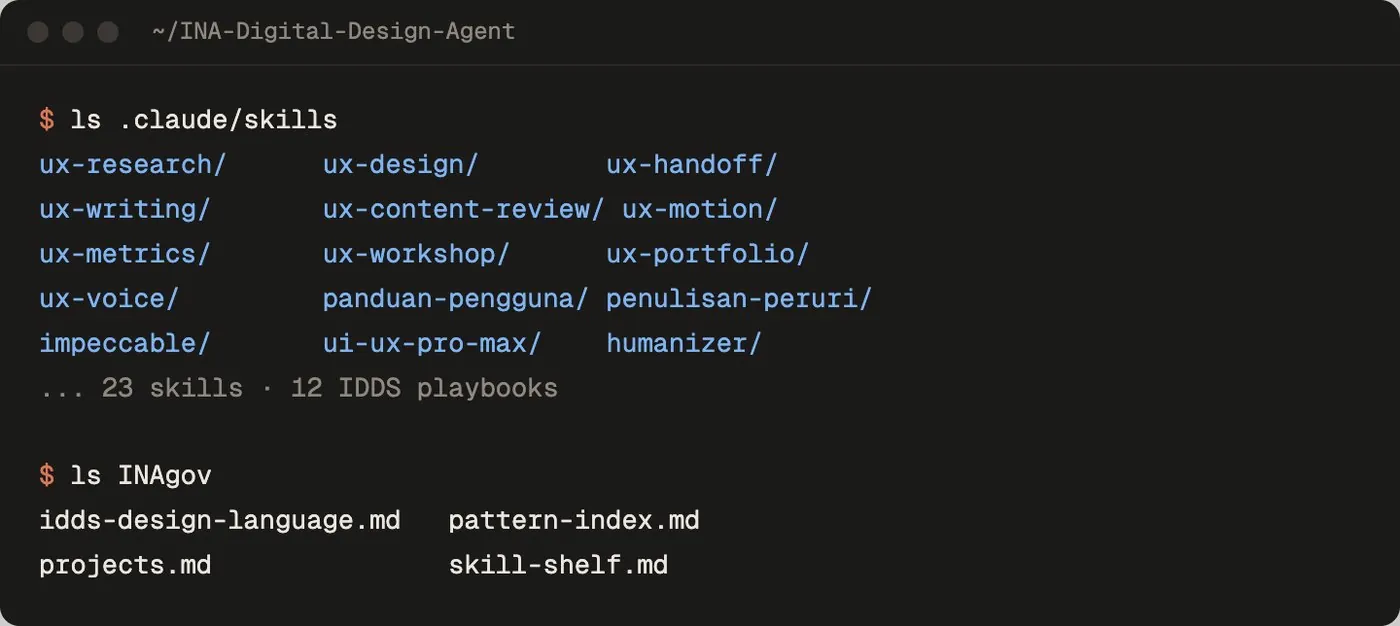
The org layer holds what every squad shares: the IDDS design language, the project registry and the pattern index. Each project keeps its own context, memory, findings, decisions and open questions. Craft lives in skills anyone can call by name, and when someone sharpens a skill, everyone gets the better version.
Every designer's sessionbriefs, decisions, feedback
→
Shared brainIDDS language, registry, pattern index, project memory
→
Skillsresearch, design, handoff, Bahasa UX copy
→
Figmahi-fi screens in genuine IDDS
/ux-research/ux-design/ux-handoff/ux-writing/ux-content-review/ux-motion/ux-metrics/ux-workshop/ux-portfolio
A brain that reads everything is too slow to be useful.
As the brain grew, just saying hello got expensive. Reading it to greet someone cost about 24,000 tokens every session. So we had to ask:
What does the agent really need to know right now?
A context ladder: the greeting opens no files at all, and a project's full memory only loads when someone chooses to continue it.
How does everyone stay in sync without thinking about it?
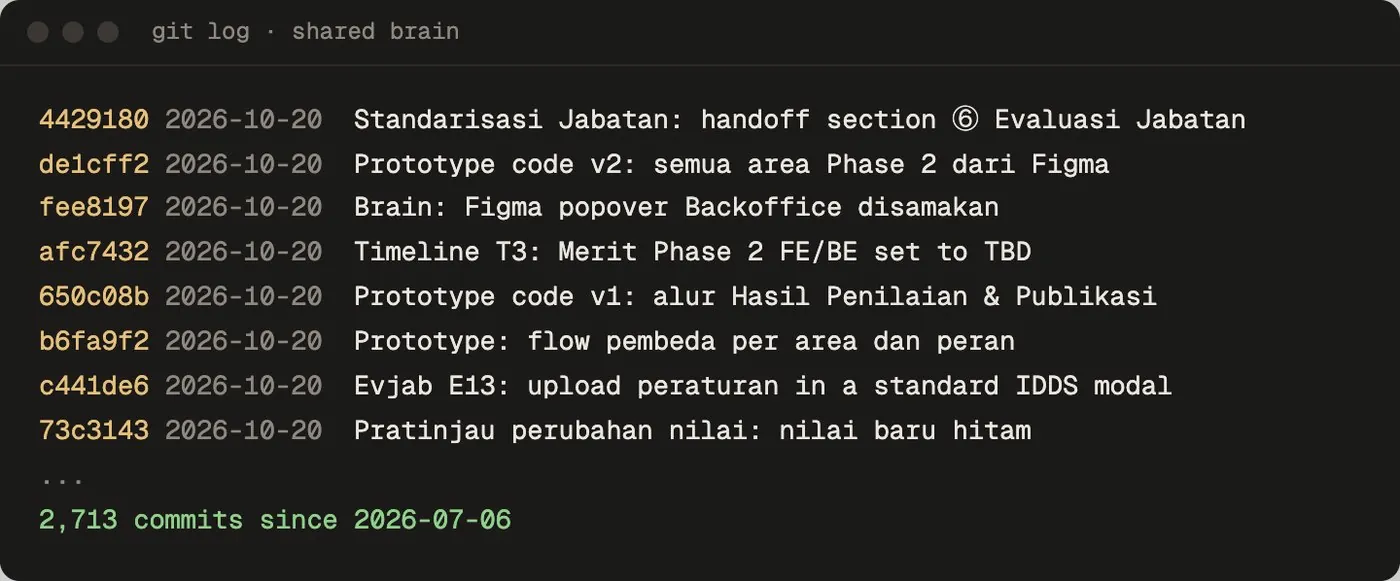
The brain pulls the latest at the start of a session and saves at the end, automatically. Typing "sync" refreshes it mid-session.
We traded an all-knowing first message for a fast one.
The agent always knows where everything is. It only opens it when the work needs it.
Now it's how the team designs, every day.
2,700+updates to the shared brain in its first 15 weeks
32projects it remembers, across INAgov and Peruri
~1 dayfrom brief to first full draft, instead of weeks
80%less time spent on exploration
What I learned
Memory is the product
The AI model was never the bottleneck. Remembering the team's decisions across every session is what made it ours.
Design for the second user
A tool I could use wasn't a team tool. It took a real front door before anyone else could walk in.